
Garment-Dyed Clothing in Los Angeles — Why Independent Brands Are Choosing It
February 14 2024 – Ivan Rosario

Los Angeles has always been a manufacturing city. What has changed is what it manufactures — and for whom. The old infrastructure was built for volume. The new one is built for story. And at the center of that new production story is garment dyeing.
The most premium independent brands launching in Los Angeles right now are not choosing garment-dyed 100% cotton because it is trendy. They are choosing it because it is the production method that justifies premium retail pricing, creates a product that develops character over time, and tells a story that their audience cannot get from a blank supplier. This is why garment-dyed clothing has become the foundation of independent brand production in LA — and why it is not going anywhere.
Los Angeles and Garment Dyeing — Why This City Became the Center of the Movement
Garment dyeing is not new. The technique has existed in apparel manufacturing for decades. What is new is the scale at which independent brands and creators are choosing it — and the role Los Angeles plays in that choice.
LA has three things no other city has in combination: a dense concentration of experienced cut and sew operators, a network of specialized garment dye houses, and a creative community of brand founders and creators who understand what garment-dyed 100% cotton does for a product. These three elements rarely coexist in the same geography. In Los Angeles, they do — within a few miles of each other.
The brands that figured this out first built real businesses on it. Established LA labels like Buck Mason built their reputation on keeping garment dyeing local — running their dye operations close to home to maintain quality control and pay living wages to the craftspeople who make it possible. The same infrastructure that serves established labels is now accessible to independent brands launching their first collections — if they know where to find it.
What Los Angeles manufacturing offers that no other city does
- Specialized dye houses — LA's garment district has dye houses that have been running reactive, pigment, and specialty washes on 100% cotton for decades. That institutional knowledge does not exist at scale anywhere else in the USA.
- SB62 compliance — California's Garment Worker Protection Act creates a manufacturing environment where ethical production is legally required. For creator brands building on transparency, this is not a constraint — it is a competitive advantage.
- Direct communication — all production in the same city means you can visit your factory, see your sample in person, and course-correct quickly. Overseas production cannot offer this.
- Made in LA story — for a creator audience that cares where their clothes are made, Los Angeles is not just a location. It is a brand signal that commands premium retail pricing.
Six Reasons Independent Brands Choose Garment-Dyed 100% Cotton Over Everything Else
Every production decision a brand makes is a business decision. Here are the six reasons independent brands and creators consistently choose garment-dyed 100% cotton production — and why those reasons compound over time.
The color is dimensional — not flat
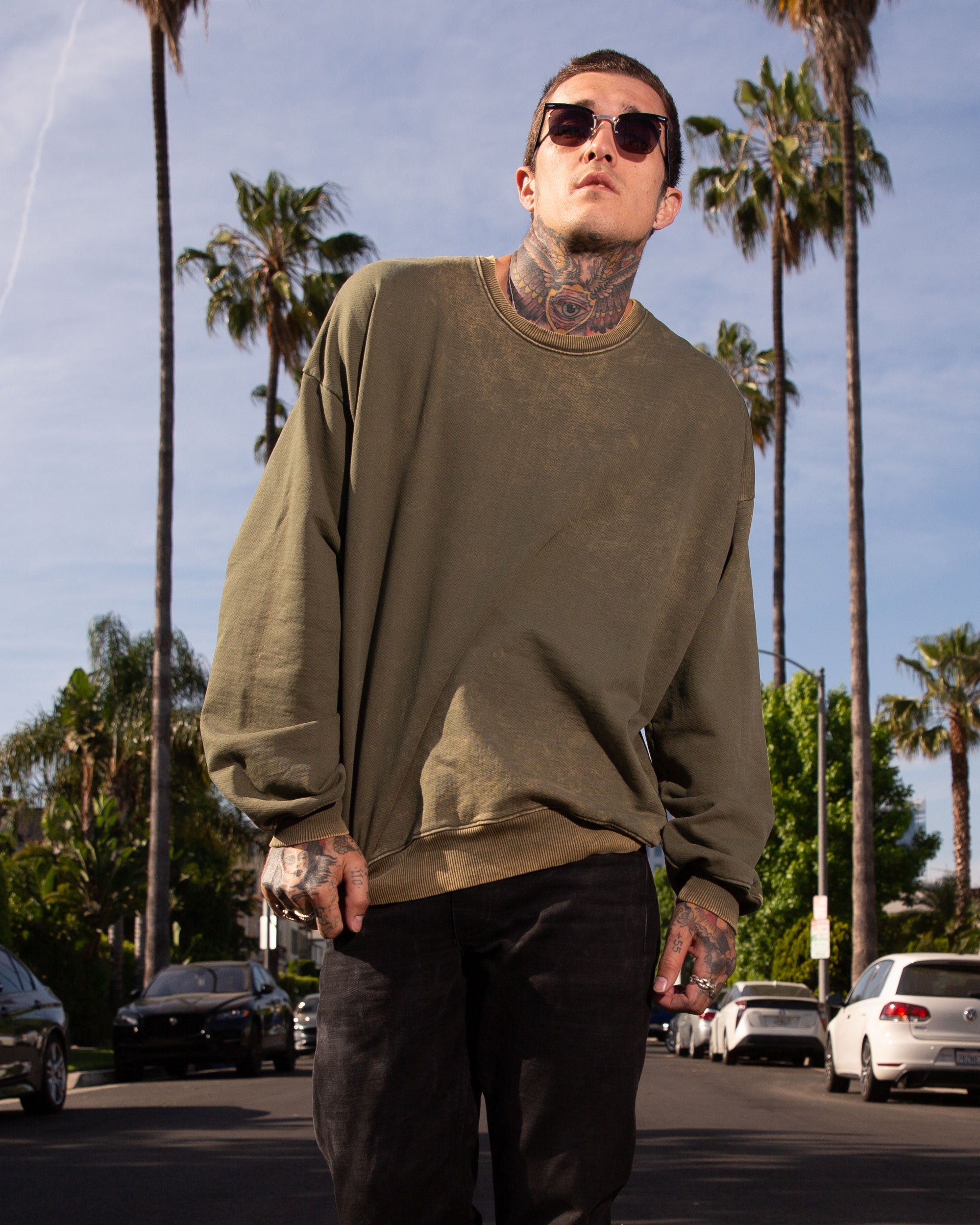
Seams absorb dye differently than panels. Ribs absorb more deeply than body fabric. The result is a color with depth and variation that piece-dyed fabric cannot replicate. That dimension is what makes a $185 hoodie look worth $185 before anyone reads the label.
No yardage commitment per color
Mill dyeing requires 800–1,000+ yards per color before you commit to a garment. Garment dyeing commits to one undyed fabric base — any Pantone TCX color applied at the garment stage. Multiple colors from one fabric program. No overcommitment before you know what sells.
The hand feel is set at production
Enzyme and silicone washes after dyeing produce a softness that piece-dyed fabric requires years of washing to achieve. The garment arrives soft. It arrives broken-in. It arrives feeling like it has been worn — which is exactly the story it tells.
Each piece has individual character
No two garment-dyed pieces are identical. The variation between units — subtle shifts in tone, depth at the seams, the way each piece absorbs color slightly differently — makes every garment unique. For a creator brand building on authenticity, that individuality is not a flaw. It is the product.
The patina develops over time
Reactive dye on 100% cotton evolves through washing and wear — softening gradually into a vintage character that makes the piece more personal over time. A garment-dyed hoodie that has been worn 100 times does not look worn out. It looks worn in. Customers do not discard it. They bond with it.
It commands premium retail pricing
A garment-dyed heavyweight hoodie made in Los Angeles from 100% cotton retails at $180 to $250 without losing audience trust. The same silhouette in a poly-cotton blank cannot hold that price. The production method is part of the product — and the product is part of the price.
Read: What Is Garment-Dyed Clothing — The Definitive Guide →
Garment-Dyed Production Is Not About Blanks — It Is About Building a Brand
This distinction matters more than most people realize — and it is the source of the most common misconception about garment dyeing.
Blanks are stock garments. They exist before you order them. They were designed by someone else, cut by someone else, sewn by someone else. When you order a blank and dye it, you are applying color to another brand's product. The silhouette, the construction, the fabric weight — none of it is yours. You are renting someone else's design language and calling it your own.
Custom garment-dyed production starts with your pattern. Your silhouette direction. Your fabric selection. Your shrinkage engineering. The garment is built for your brand — not sourced from a warehouse and colored. When it comes out of the dye house, it is yours in a way that a dyed blank never can be.
"The most successful creator brands are not building on blanks. They are building on patterns — custom silhouettes that belong to them and can be reordered exactly, season after season."
This is the shift that separates brands that scale from brands that stall. A blank program hits a ceiling — because the blank is available to everyone, the product is not differentiated, and the customer has no reason to pay a premium. A custom garment-dyed program built on your own patterns compounds — each reorder is your product, your fit, your color, your story. The brand becomes the product rather than the decoration on someone else's.
Read: Garment Dyed vs Piece Dye — The LA Manufacturer's Honest Guide →
What Garment-Dyed Production in Los Angeles Actually Looks Like — The Essentials Made Program
We are Los Angeles's specialist in 100% cotton garment-dyed cut and sew production. Not one service among many — the only thing we do. Every fabric in our program is chosen for garment-dye performance. Every pattern is engineered with shrinkage compensation calibrated for the specific fabric and treatment. Every production run goes through the same controlled dye house process.
Our four core production-ready silhouettes
- Drop Shoulder Hoodie — 360GSM heavyweight 3-end fleece. Oversized unisex fit. The anchor piece of most Capsule Run collections. Pairs with matching sweatpants for exact color consistency.
- Drop Shoulder Crewneck — 360GSM heavyweight fleece. Same oversized block as the hoodie. Available as an alternative anchor for crewneck-first collections.
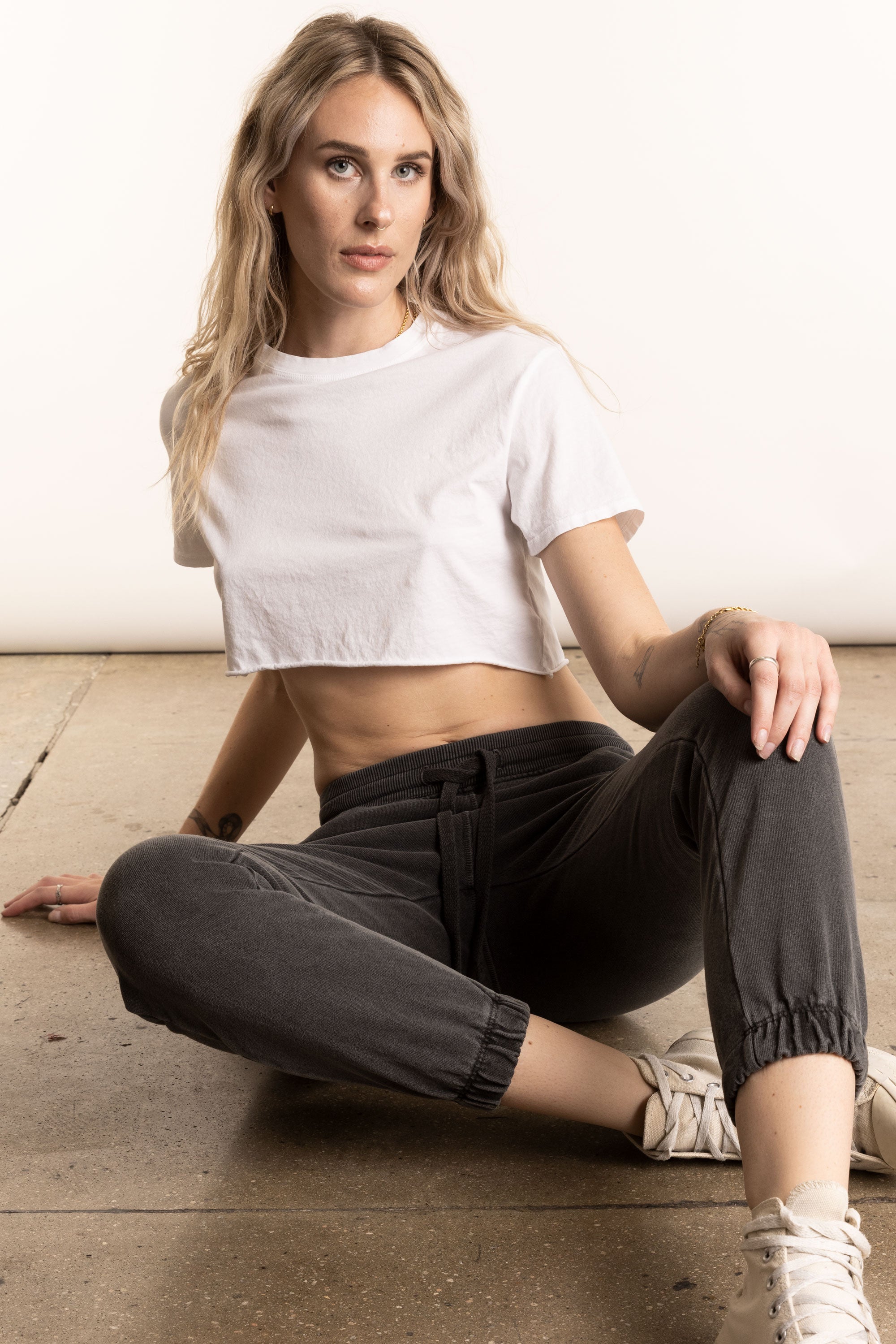
- Matching Sweatpants — 360GSM heavyweight fleece. Relaxed oversized fit. Shares the same fabric and dye lot as the hoodie or crewneck — exact color matching across the set guaranteed.
- Boxy Oversized Tee — high-density 100% cotton jersey. Dropped shoulders, boxy silhouette. The entry piece for brands building a full essentials program.
Three dye treatments — one for every aesthetic direction
- Reactive Dye (standard) — clean, rich color with natural tonal variation. Deep Pantone TCX match. The foundation of the program.
- Pigment Dye (+$7 per piece) — more vintage, chalky color effect. Greater surface variation. Strong streetwear or heritage aesthetic.
- Potassium Wash — Sun Dyeing (+$12 per piece) — dramatic faded, sun-bleached finish with significant color variation across each piece. The most editorial treatment we offer.
The Brand Story That Garment-Dyed LA Production Creates — And Why It Sells
A creator brand's most valuable asset is not its product. It is the story its audience believes about the product. And nothing creates a more compelling story for an independent brand in 2025 than a garment-dyed collection made in Los Angeles from 100% cotton.
The story has three layers that compound on each other.
The production story
Cut in Los Angeles. Sewn in Los Angeles. Dyed in a Los Angeles dye house by people who have been doing this for decades. Every step of your supply chain is verifiable, local, and story-worthy. Your audience can visit. They can see the factory. They can understand what Made in LA actually means — not as a marketing claim, but as a physical reality. That verifiability is what separates authentic brands from brands that perform authenticity.
The material story
100% cotton. No synthetics. No blends. A natural fiber that breathes, absorbs color deeply, softens over time, and develops a patina that tells the story of every wear. The material is not a spec on a tag — it is the experience of the garment. Your audience feels it. And feeling is what drives repeat purchase.
The time story
A garment-dyed piece gets better with wear. The color softens. The hand feel deepens. The piece becomes more individual over months and years of washing and wearing. This is the opposite of fast fashion — which peaks at purchase and declines with every wash. A garment that improves with time creates customers who come back — not because they need to replace what wore out, but because they want more of something they love.
What your audience is actually buying when they buy garment-dyed
They are not buying a hoodie. They are buying the story of how it was made, the feeling of wearing something that is genuinely premium, and the experience of watching it become more personal over time. That is a fundamentally different purchase decision than buying a blank — and it commands a fundamentally different price. Garment-dyed 100% cotton made in Los Angeles is not a category of product. It is a category of experience.
Read: How Independent Creators Are Launching Clothing Lines in Los Angeles →
How to Start a Garment-Dyed Collection in Los Angeles — The Practical Path
The path from idea to first garment-dyed collection is more straightforward than most brand founders expect. Here is what it actually takes.
- Start with a reference garment — a hoodie, crewneck, or sweatpant you already love. We use a Replica-First approach — recreating your pattern, engineering it for 100% cotton garment-dyed production, and building your version from what you know works.
- Pattern development deposit — starting from $900 for a hoodie or sweatpants, $800 for a crewneck, $600 for a tee. This starts the process and covers pattern drafting and your garment-dyed pre-production sample.
- Sample in 2 weeks — your garment-dyed sample arrives approximately 2 weeks after your development deposit. Real product. Real color. Ready to photograph and sell.
- Launch your pre-sale — photograph your sample, open pre-orders to your audience, and collect orders before production begins. Your customers fund the production deposit.
- Production deposit and manufacturing — 50% of the production invoice starts manufacturing. Cut, sewn, and garment-dyed in Los Angeles. 4 to 5 weeks to delivery.
- First delivery — your collection arrives with your private label branding. Your audience receives exactly what they pre-ordered. And your fabric program is locked in for consistent reorders.
Read: Start a Clothing Brand in Los Angeles — What It Actually Takes →
FAQ — Garment-Dyed Clothing in Los Angeles
What makes garment-dyed clothing different from regular dyed clothing?
Garment dyeing happens after the garment is fully constructed — cut, sewn, and finished — rather than before. The entire piece enters the dye bath simultaneously: body panels, seams, ribs, and cuffs. Color penetrates every component at the same time, producing dimensional, tonal variation that piece-dyed fabric cannot replicate. The process is followed by enzyme and silicone washes that produce the characteristic soft, lived-in hand feel from the first wear.
Why is Los Angeles specifically good for garment-dyed production?
Los Angeles has a unique combination of experienced cut and sew operators, specialized garment dye houses with decades of 100% cotton dyeing expertise, and a creative community of independent brand founders who understand what the method produces. That infrastructure does not exist at the same scale anywhere else in the USA. Add SB62 compliance, direct communication, fast timelines, and the Made in LA brand story — and no other geography offers the same combination for independent brand production.
Is garment-dyed clothing the same as buying dyed blanks?
No — and the difference is fundamental. Blanks are stock garments designed and produced by someone else. When you dye a blank, you are applying color to another brand's silhouette. Custom garment-dyed production starts with your pattern — your silhouette, your construction, your fabric. The garment is built for your brand before it enters the dye bath. The result is a product that is exclusively yours, reorderable exactly, and buildable into a real brand identity over time.
What is the minimum order for garment-dyed production at Essentials Made?
Our Capsule Run starts at 50 pieces per style when two or more styles share the same fabric and dye lot — from approximately $3,500 per style. A matching hoodie and sweatpant Capsule Run starts at approximately $7,000 total for both styles. Pattern development is a separate paid process before production. All production requires a 50% deposit to begin.
Can I start a garment-dyed collection without funding production upfront?
Yes — through our Pre-Sale Program. You develop your garment-dyed sample, photograph it, and sell it to your audience before manufacturing begins. Your customers fund the production deposit. You only manufacture what is already sold. Learn more about our Pre-Sale Program →
How long does garment-dyed production take in Los Angeles?
Pattern development and your garment-dyed sample take approximately 2 weeks after the development deposit. Cut and sew production takes 4 to 5 weeks after sample approval and production deposit. Total timeline from project start to delivery is typically 6 to 7 weeks. All production happens in our Los Angeles network — no overseas delays.
Ready to build your garment-dyed collection in Los Angeles?
Tell us about your brand, your reference garment, and your color direction. We will guide you through development, sampling, and production with honest next steps.
100% cotton. Garment-dyed. Made in Los Angeles. Built for independent brands ready to own their production.
Prefer email? hello@essentialsmade.com
1 comment
Thank you for your inquiry. I would like to know if you do offer 50/50% Cotton or 100 % cotton blank T-shirts. Below are the details for the sizes and colors that i will need.
Orange (Small, Medium) 100/100 pieces
White (Small, Medium, Large) 100/100/100 pieces
Black (Small, Medium, Large) 100/100/100 pieces
Regarding payment, If credit card surcharges may apply, Please provide a detailed breakdown, including sales tax and shipping fee within the State.
Looking forward to your reply.
Best Regards