
What Is Garment-Dyed Clothing — The Definitive Guide From an LA Manufacturer
January 28 2024 – Ivan Rosario

You have seen the color. That dimensional, slightly uneven, lived-in shade that makes a heavyweight hoodie look like it has been with you for years — on the first wear. You have felt the hand feel. That soft, broken-in texture that no fresh-off-the-roll fabric can replicate. What you are experiencing is garment dyeing. And there is a reason the most premium independent brands in the world have made it the foundation of their production.
Garment dyeing is not a finishing technique. It is not a treatment applied after the fact. It is a complete production methodology — one that changes the sequence of manufacturing, the behavior of the fabric, the character of the color, and the story the garment tells. This is the definitive guide to what garment-dyed clothing actually is — written by the people who do it every day in Los Angeles.
What Garment-Dyed Clothing Actually Is — The Process From Start to Finish
In conventional clothing manufacturing, fabric is dyed first. Rolls of greige fabric — undyed, unfinished — are sent to a mill dye house where they are immersed in dye baths, dried, and returned as colored yardage. The cutter receives colored fabric. The sewing floor assembles the garment from colored panels. The finished piece is the same color it was when the fabric arrived.
Garment dyeing inverts this sequence entirely. The fabric arrives undyed — in its raw, greige state, prepared for dyeing (PFD). It is cut into panels, sewn into a finished garment, and only then does it enter the dye bath. The entire constructed piece — body panels, seams, ribs, drawcords, labels — is immersed simultaneously. Color penetrates every component at the same time, in the same bath, at the same temperature.
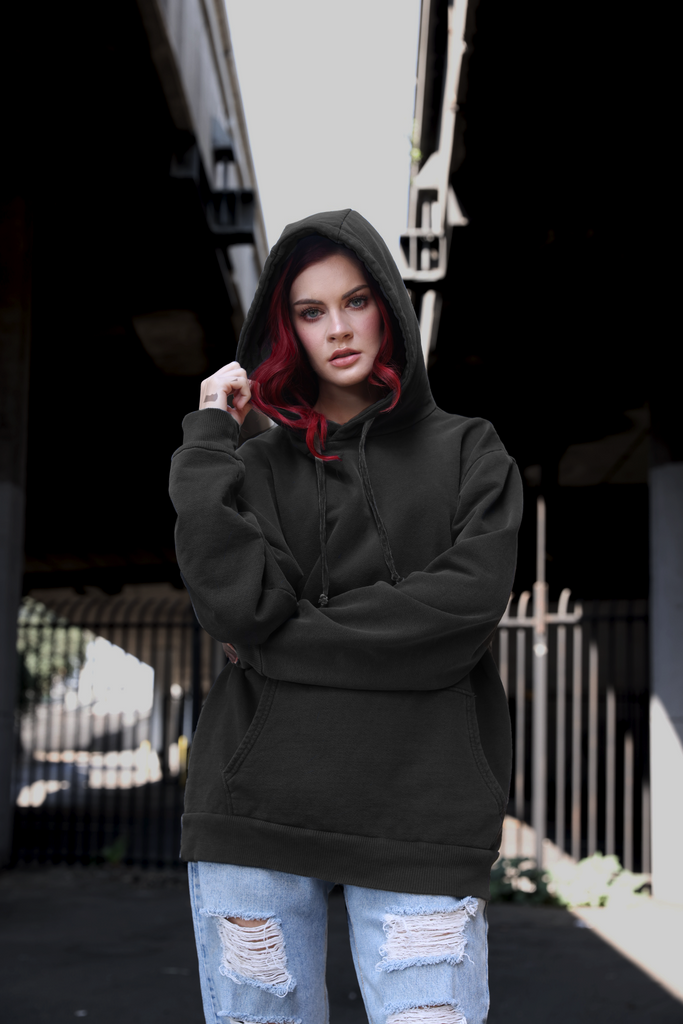
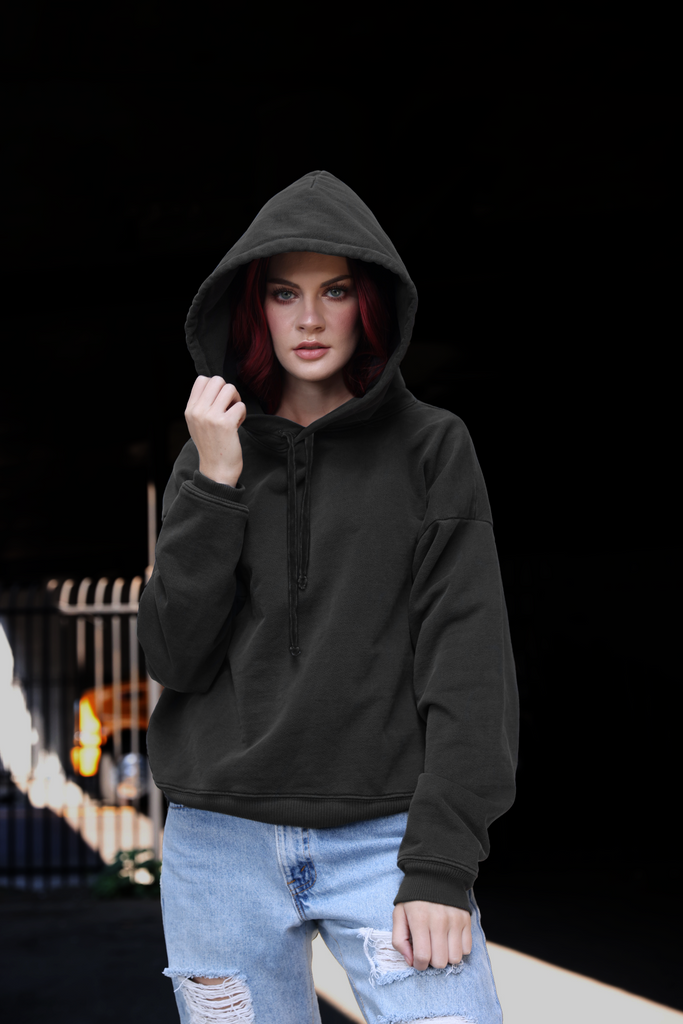
This is why garment-dyed color looks the way it does. Seams absorb differently than flat panels. Rib cuffs absorb more deeply than body fabric. The color is not flat — it is dimensional. It has depth. It has variation. And that variation is not a defect. It is the signature of a garment that was made with intention.
The production sequence that changes everything
- Step 1 — Greige fabric sourced — 100% cotton PFD fabric knitted to order from our Los Angeles fabric program. No color applied at this stage.
- Step 2 — Pattern and cut — fabric is cut into panels using our production-ready patterns, engineered with shrinkage compensation built in.
- Step 3 — Sewing — panels assembled into finished garments in our Los Angeles cut and sew network. Garments are complete but undyed.
- Step 4 — Garment dye bath — finished garments immersed in reactive dye bath at controlled temperature and duration. Color penetrates every fiber simultaneously.
- Step 5 — Enzyme wash — removes surface fuzz, softens the hand feel, and stabilizes the fiber after dyeing.
- Step 6 — Silicone wash — adds drape, smoothness, and pilling resistance. The finished hand feel is set at this stage.
- Step 7 — QC and delivery — every garment measured against approved tolerances before release.
Read: Garment Dyed vs Piece Dye — The LA Manufacturer's Honest Guide →
Why Garment Dyeing Only Works on 100% Cotton — And Why That Matters for Your Brand
This is the question that separates brands who understand garment dyeing from brands who think they do. Why 100% cotton? Why not polyester? Why not a cotton-poly blend that might cost less per yard?
The answer is chemistry. Reactive dye — the type used in garment dyeing for the color depth and wash fastness it produces — chemically bonds with the cellulose in cotton fiber. The dye molecule penetrates the fiber and forms a covalent bond at the molecular level. This is why reactive garment-dyed color does not sit on the surface. It lives inside the fiber. It does not crack, peel, or fade unevenly after washing.
Polyester is a synthetic polymer. It does not contain cellulose. Reactive dye has no fiber to bond with — it slides off, or at best, produces a faint, uneven surface stain that washes out within a few cycles. Poly-cotton blends create a different problem: the cotton fibers absorb the reactive dye deeply while the polyester fibers resist it, producing visible inconsistency across the same garment — patches of darker and lighter color that cannot be corrected at the dye house level.
"Cotton tells the truth. It absorbs color like memory, softens with each wash, and wears better with time. There is no substitute that produces the same result."
This is why our entire production program is built on 100% cotton — heavyweight 3-end fleece, French terry, and high-density jersey. Not because polyester is worse in every application. Because garment dyeing specifically requires cotton, and we are specialists in garment dyeing. That focus is what makes the result consistent.
Read: Fabric Programs for Garment-Dyed Production — Los Angeles →
The Three Garment Dye Treatments — What Each One Produces and When to Use It
Not all garment dyeing looks the same — and it should not. The dye treatment you choose determines the aesthetic character of your collection. At Essentials Made we offer three treatments, each producing a distinct visual result and requiring its own test cycle and pattern calibration before production.
Reactive Dye
Standard — included
The foundation of our garment dye program. Clean, rich color with natural tonal variation around seams and panels. Deep Pantone TCX color that holds through repeated washing. The most versatile treatment — works across all fabric weights and silhouettes. This is what most people picture when they think of garment-dyed essentials.
Pigment Dye
+$7 per piece
A more vintage, chalky color effect. Pigment sits slightly differently on the fiber surface than reactive dye — producing a more muted, faded initial appearance with greater color variation across the garment. Strong vintage or streetwear aesthetic. Develops further character with washing over time.
Potassium Wash (Sun Dyeing)
+$12 per piece
The most distinctive treatment we offer. Potassium permanganate creates a faded, sun-bleached finish with significant color variation across the garment — mimicking the natural aging of fabric exposed to sun and repeated washing over years. Each piece is unique. The most editorial of our three treatments — strong brand statement for collections built around authenticity and character.
Why each treatment requires its own test cycle
Pigment dye and potassium wash behave differently than reactive dye in the dye bath — different temperatures, different pH, different interaction with the cotton fiber. Each treatment produces different shrinkage behavior, which means the pattern allowances have to be calibrated separately for each one. A pattern engineered for reactive dye will not produce the correct fit in a potassium wash run. This is why we run a complete test cycle before production for any treatment outside the standard reactive dye process. It is not a preference — it is a production requirement.
Garment Dyed vs Piece Dyed — Why the Difference Is Not About Aesthetics Alone
Most comparisons between garment dyeing and piece dyeing focus on the visual result — dimensional vs flat color, lived-in vs clean. Those differences are real and important. But the more significant difference for a brand building a collection is operational — it is about minimums, timing, and capital commitment.
| Factor | Garment Dyeing | Piece Dyeing (Mill-Dyed Fabric) |
|---|---|---|
| Color application | ✓ After construction — entire garment simultaneously | Before construction — fabric rolls dyed at mill |
| Color character | ✓ Dimensional — seams and panels absorb differently | Flat — uniform color throughout |
| Color minimums | ✓ Any Pantone TCX — no yardage commitment per color | ~ Typically 800–1,000+ yards per color + dye fees |
| Fabric requirement | 100% cotton only | Works with polyester, blends, cotton |
| Hand feel | ✓ Enzyme + silicone washed — soft from day one | ~ Varies — depends on finishing process |
| Shrinkage | 3–5% — engineered into pattern allowances | Minimal — fabric pre-shrunk before construction |
| Reorder consistency | ✓ Knit-to-order fabric program — matches every time | Depends on mill lot availability |
| Best for | Drop-based brands, creator collections, DTC labels | Large-scale uniform programs, inventory models |
The color minimums line is the one that matters most for independent brands. Committing to 800 to 1,000 yards of custom-dyed fabric per color — before you know if that color sells — is a significant capital risk. Garment dyeing removes that risk entirely. You commit to one undyed fabric base. You apply color at the garment stage. Multiple colors from the same fabric program, without separate mill dye lots. That is the structural advantage that makes garment dyeing the production method of choice for brands building on real demand rather than inventory speculation.
The Shrinkage Reality — Why It Is Engineered In, Not Guessed At
Every honest conversation about garment dyeing has to include shrinkage. The dye bath involves heat, water, and agitation. Cotton fibers contract. The finished garment will be smaller after dyeing than it was before. This is not a defect — it is a physical property of the process, and it is the reason most manufacturers avoid garment dyeing entirely.
The industry standard range is 3 to 5 percent shrinkage for garment-dyed 100% cotton. Within that range, production is considered successful — the garment fits, holds its shape, and washes true to expectations. But here is what most guides do not tell you: shrinkage does not behave the same way in length and width. A hoodie may pull more lengthwise than across the chest. The rib may behave differently than the body fleece. Every fabric weight, every construction, every dye treatment produces different shrinkage behavior.
A manufacturer who adds a blanket 4 percent to every pattern is averaging the problem — not solving it. Our patterns are engineered with shrinkage compensation calibrated separately for each fabric weight, each silhouette, and each dye treatment. That precision is what produces a finished garment that matches your approved sample exactly — not approximately.
Read: Garment Dyeing Shrinkage — The Honest Guide From an LA Manufacturer →
Why Garment-Dyed Clothing Has Dominated Independent Fashion Since 2020 — And Is Still Growing
Garment dyeing has been a sustained production trend since the early 2020s — not a microtrend that peaked and faded, but a structural shift in what premium independent brands and their customers expect from a garment. Industry data confirms it. Suppliers report garment-dyed styles continuing to perform strongly across categories. The aesthetic has moved from niche to mainstream without losing its premium positioning — which is rare in fashion.
Three forces drove this shift and continue to sustain it.
The rejection of sameness
Mass market fashion produces identical garments at scale. Every unit is the same color, the same hand feel, the same flat uniformity. Garment-dyed clothing is inherently individual — the tonal variation between pieces, the dimensional character of the color, the way each garment develops its own patina through washing and wear. For a generation of consumers who curate their wardrobes rather than fill them, that individuality has real value.
The premium streetwear shift
The convergence of streetwear and luxury — what industry analysts have tracked as luxury streetwear becoming the dominant aesthetic in independent brand fashion — elevated the standard for what a hoodie or tee is supposed to be. A $180 garment-dyed heavyweight hoodie made in Los Angeles from 100% cotton is not competing with a $35 blank. It is competing with premium lifestyle brands — and the garment-dyed production method is what allows an independent creator brand to produce at that quality level and charge that price honestly.
The creator economy distribution model
Creator brands do not need retail distribution or wholesale accounts to reach their customers. They sell direct — through social channels, email lists, and community platforms. This changes the economics of production entirely. A creator with 25,000 engaged followers does not need 10,000 units to make a production run viable. They need 50 to 150 units that their audience will sell out in 48 hours. Garment dyeing at the Capsule Run scale — 50 pieces per style — is precisely the production method that makes this business model work.
Read: How Independent Creators Are Launching Clothing Lines in Los Angeles →
How to Care for Garment-Dyed Clothing — What Keeps the Color and What Destroys It
Garment-dyed clothing is designed to develop character through washing and wear. The color will evolve — subtly, gradually — in the direction of a vintage patina that makes the piece feel more personal over time. This is not a flaw. It is the intended behavior of a reactive dye process on 100% cotton. How you wash the garment determines whether that evolution is graceful or abrupt.
- Cold water, always. Hot water accelerates dye release and accelerates shrinkage beyond the initial controlled shrinkage engineered into the pattern. Cold water preserves both color depth and dimensional stability.
- Gentle cycle. High agitation in a standard wash cycle replicates the conditions of the dye bath — which is exactly what you want to avoid once the garment is finished. Gentle cycle reduces fiber stress and maintains hand feel.
- Mild detergent. Harsh detergents with strong surfactants strip reactive dye faster than normal washing would. A mild detergent formulated for colors or delicates preserves the depth of the garment-dyed result significantly longer.
- Wash dark colors separately for the first two washes. Reactive dye achieves its bond during the dye process, but a small amount of unbonded dye may release in the first wash or two. Washing separately prevents color transfer onto lighter garments.
- Air dry when possible. Tumble drying on high heat accelerates color fading and fiber breakdown beyond what low-heat or air drying would produce. If you use a dryer, use the lowest heat setting.
The patina effect — why fading is part of the design
A well-made garment-dyed hoodie that has been washed 50 times does not look worn out. It looks worn in — and there is a significant difference. The color softens. The hand feel deepens. The character of each piece becomes more individual. This is the behavior reactive dye on 100% cotton is designed to produce over time. It is why garment-dyed clothing commands premium pricing and loyal customers — the product gets better with use, not worse. Proper care extends the timeline of that evolution and keeps the garment looking intentional rather than neglected.
Essentials Made — Los Angeles's Specialist in 100% Cotton Garment-Dyed Production
Most Los Angeles manufacturers do not specialize in garment dyeing. They offer it as one option among many — alongside piece-dyed programs, poly-cotton options, and general cut and sew work. That breadth is a liability in garment-dyed production. Every variable in the dye bath — fabric weight, cotton preparation, dye temperature, wash sequence — requires deep familiarity to produce consistent results. Manufacturers who do everything rarely master anything.
Essentials Made does one thing: 100% cotton garment-dyed essentials, manufactured in Los Angeles. Every fabric in our program is chosen for its garment-dye performance. Every pattern is engineered with shrinkage compensation calibrated for the specific fabric and treatment. Every production run goes through the same controlled dye house process. The result is a finished garment that matches your approved sample — not approximately, but exactly.
Our garment-dyed production program at a glance
- Fabrics — 360GSM heavyweight 3-end fleece, French terry, high-density jersey. All 100% cotton, all PFD-prepared, all knit-to-order for consistent reorders.
- Silhouettes — drop shoulder hoodie, drop shoulder crewneck, matching sweatpants, boxy oversized tee. Production-ready patterns available.
- Dye treatments — reactive dye (standard), pigment dye (+$7/piece), potassium wash — sun dyeing (+$12/piece). All colors Pantone TCX matched.
- Production tiers — Capsule Run from 50 pieces per style (2+ styles sharing fabric); Growth Run from 150 pieces; Collection Run 300+ pieces.
- Timeline — approximately 2 weeks for patterns and garment-dyed sample; 4–5 weeks for production after approval. Total 6–7 weeks.
- Compliance — SB62 compliant. All production in our Los Angeles network.
Learn about our full LA manufacturing program →
FAQ — Garment-Dyed Clothing
What is garment-dyed clothing?
Garment-dyed clothing is produced by dyeing the fully constructed garment after sewing — rather than dyeing the fabric before construction. The entire piece enters the dye bath simultaneously: body panels, seams, ribs, cuffs, and trims. Color penetrates every fiber at the same time, producing a dimensional, tonal result that piece-dyed fabric cannot replicate. The process is followed by enzyme and silicone washes that produce the characteristic soft, lived-in hand feel.
Why does garment-dyed clothing look different from regular dyed clothing?
Because the color is applied after construction rather than before. Seams absorb dye differently than flat panels. Rib cuffs and waistbands absorb more deeply than body fabric. The result is tonal variation — subtle shifts in color depth across the garment — that gives each piece dimension and character. This variation is the signature of genuine garment dyeing, not a quality issue. It is what separates garment-dyed essentials from piece-dyed alternatives and mass-produced blanks.
Why is garment dyeing only possible with 100% cotton?
Reactive dye — the type used in garment dyeing for color depth and wash fastness — chemically bonds with cellulose, the natural polymer in cotton fiber. Polyester does not contain cellulose and cannot form this bond. Poly-cotton blends dye unevenly — the cotton fibers absorb deeply while the polyester resists color, creating visible inconsistency across the same garment. 100% cotton is the only fiber that delivers the consistent, dimensional result garment dyeing produces.
Will my garment-dyed clothing shrink?
Yes — and this is engineered into the production process, not left to chance. Garment dyeing involves heat, water, and agitation that cause cotton fiber to contract. The industry standard range is 3–5% shrinkage. At Essentials Made, our patterns are engineered with shrinkage compensation calibrated separately for length and width — and for each specific fabric weight and dye treatment — so the finished garment after dyeing matches your approved fit precisely. After the initial shrinkage occurs during production, the garment is dimensionally stable through normal washing with cold water.
What is the difference between reactive dye, pigment dye, and potassium wash?
Reactive dye is our standard treatment — clean, rich color with natural tonal variation and excellent wash fastness. Pigment dye (+$7 per piece) produces a more vintage, chalky, muted color effect with greater surface variation. Potassium wash — Sun Dyeing (+$12 per piece) creates a dramatically faded, sun-bleached finish with significant color variation across the garment — the most distinctive and editorial of the three treatments. Each treatment requires its own test cycle and pattern calibration before production.
How do I care for garment-dyed clothing?
Cold water, gentle cycle, mild detergent. Wash dark colors separately for the first two washes. Air dry when possible — or use the lowest heat setting if you use a dryer. Garment-dyed color on 100% cotton is designed to develop character over time through washing and wear — the color softens gradually into a vintage patina that makes each piece more personal. Proper care extends the timeline of this evolution rather than accelerating it.
What is the minimum order for garment-dyed production at Essentials Made?
Our Capsule Run starts at 50 pieces per style when two or more styles share the same fabric and dye lot — from approximately $3,500 per style. A matching hoodie and sweatpant Capsule Run starts at approximately $7,000 total. Our Growth Run starts at 150 pieces per style and our Collection Run at 300 or more pieces. All production requires a 50% deposit to begin. Read our full MOQ guide →
How long does garment-dyed production take?
Pattern development and your garment-dyed pre-production sample take approximately 2 weeks after the development deposit. Cut and sew production takes 4 to 5 weeks after sample approval and production deposit. Total timeline from project start to delivery is typically 6 to 7 weeks. All production happens in our Los Angeles network — no overseas delays, no customs holds.
Ready to build your garment-dyed collection in Los Angeles?
We are Los Angeles's specialist in 100% cotton garment-dyed essentials. Tell us about your brand, your reference garment, and your color direction — we will guide you through development, sampling, and production.
Built for independent brands already selling and ready to own their production.
Prefer email? hello@essentialsmade.com
0 comments